
For years, Principal Janis Delgado tried to get Raina Strang to stay at Come Back Butte Charter School. Strang kept leaving. By her own estimate, she walked away and returned at least 11 times.
Every time, the school let her back in.
“It wasn’t like, ‘Oh, you didn’t come to school, and we’re done with you now,’” Strang said. “When life was getting hard, they didn’t just close the door on me. They opened it every single time I came back.”
Strang has now worked at Come Back for four years as its Parent and Family Engagement Liaison. She finished Butte College with two associate degrees and recently enrolled in the social work program at Chico State. When students show up hungry, worn down or ready to quit, she is often the first person on staff to recognize what is going on–because she has been there.
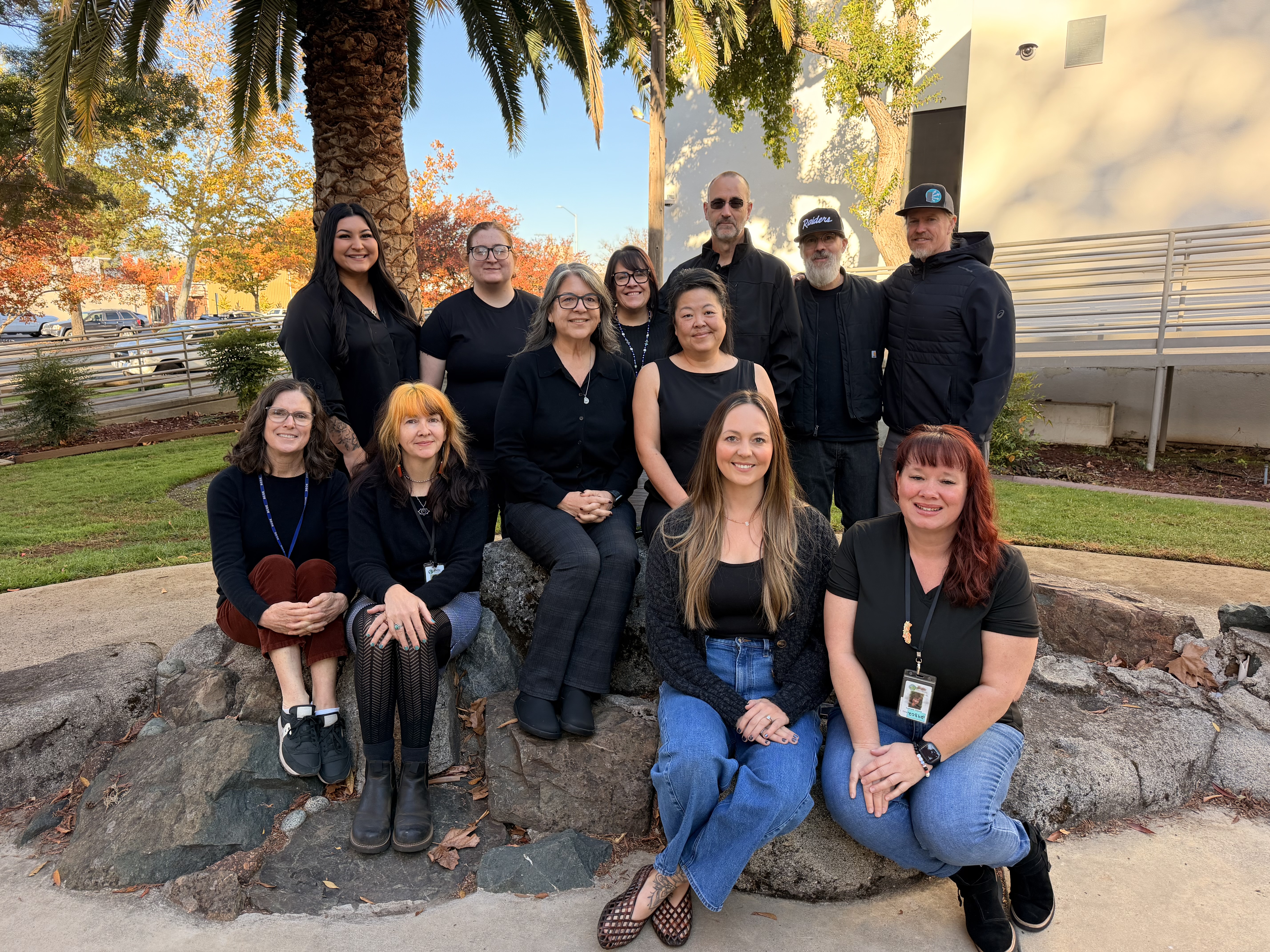
Come Back Butte Charter, a Butte County Office of Education charter school in Oroville, serves students 16 and older who have not finished high school. Through independent study and weekly meetings with teachers, students earn a diploma or prepare for the HiSET, a high school equivalency exam.
Everyone Has a Turning Point
Strang said that growing up, almost no one told her school mattered. Her father’s drinking made home unstable, and school fell to the bottom of her list.
“Obviously, when there’s stuff going on at home, I didn’t want to go to school,” she said.
The last time she came back, she was pregnant. Her new teacher told her that with almost no credits and a baby on the way, the HiSET was her best path to finishing. She didn’t want to hear it. She had always worked with a different teacher and resented the switch.
“I was like, ‘I don’t know. I just don’t like you, so I’m not going to listen to what you say,’” she said.
But she took the exams anyway. On what she called “a random Thursday,” when her son was about a year old, she called the school to tell everyone she had passed.
Asked what changed her mind, Strang answered in two words: “My son.”
Delgado helped her see what was at stake. She would ask Strang what she planned to do when her son needed braces, or wanted a car, or had to see a doctor and they had no insurance.
“I wasn’t thinking about me,” Strang said. “Something had to change for me to think about him.”
Passing the HiSET raised a new question. “I don’t know what I’m supposed to do now,” she remembers thinking. “I don’t know where I’m supposed to go.”
Staff had answers: enroll at Butte College, and apply for a job opening at Come Back. She said no to both.
“I already just finished high school,” she said. “I don’t like school. I’m not doing it.”
She applied for the job anyway, nervous, and ended up loving it. Eventually, staff persuaded her to sign up for classes at Butte, where she earned straight A’s and has kept earning them since. During that time she was in an abusive relationship. She left it, and she and her son moved into a place of their own.
“I never thought he would see me in a cap and gown,” she said, “and now he’ll see me in a cap and gown at least three times.”

Delgado said the hardest part for Strang was never the coursework.
“She had to quit thinking she wasn’t worthy,” Delgado said. “I think many of our students think that they’re not worthy. She is worthy, and we want her to believe that and believe in herself.”
A student’s-eye view
In a traditional classroom of 40, Delgado said, students like hers often go unnoticed.
“They just were pushed on through the cracks,” she said. “Here they come in and they get to be somebody.”
Each morning, Come Back staff meet to talk through individual students: what each one needs and what concerns are emerging. Strang brings a view the rest of the staff can’t.
“Raina has that young eye on our students,” Delgado said. “She can say, ‘No, they don’t want to do that. They’re going to want to do it this way.’”
Much of what keeps students away, Strang said, has nothing to do with school.
“How can we expect them to think about school when they’re hungry?” she said. “How do we expect them to think about school when they don’t have clothes that fit them and their shoes are too tight?”
Last year, Strang secured a North Valley Community Foundation grant for food, bought the groceries and set up what the school calls the Come Back Market. She also started a clothing closet, stocked in part by a used-clothing store in Chico. Students who come in hungry can go home with a bag of food, and young parents can pick up diapers and formula.
“Maybe these moms can’t get all of those things, and you’re trying to make this one diaper last,” Strang said. “It’s just like, ‘Go over there and get a pack of diapers because you need it.’”
Strang has also noticed when students were being abused. After she raised concerns, the school’s transition specialist contacted Catalyst Domestic Violence Services, which now leads workshops at Come Back a couple of times a year. Strang tells staff which students need to be there.

“What if somebody would have given her Catalyst when she was there?” Delgado said. “Raina has stopped the cycle in her life. It’s not continuing past her.”
Some of the young women Strang sees are in relationships she recognizes from her own life. She wants to tell them to leave now, she said, but knows they may not be able to see it yet. She is patient with them, and with the young mothers who arrive convinced they can’t finish.
“I root for all of them, but I’m extra rooting for those moms,” she said. “This is going to open so many doors for you that you didn’t think were possible.”
Keeping the door open
Strang now makes sure her son hears what she didn’t. When he fell a little behind in reading, she did everything she could to help. He now reads two grade levels ahead, she said.
“I know how important school is now because I’m a mom and because I had gone through it,” she said. “I didn’t think school would have done any of this for me and got me this far.”
She is not the only Come Back graduate still going. Delgado said another graduate is in a social work program and another attends UC Davis. At graduation each year, Delgado tells the crowd how many more high school graduates Butte County has because of Come Back.
“I always say that’s the hardest thing our students do, is grab that door handle and pull it,” she said. “We want to be one that they can open.”
Leave a Reply
You must be logged in to post a comment.