
In a single word, interim senior director Jerry Hight characterized the past year in the Back 2 Work program without hesitation.
“Disruptive.”
Then, with a smile, he added, “In a good way.”
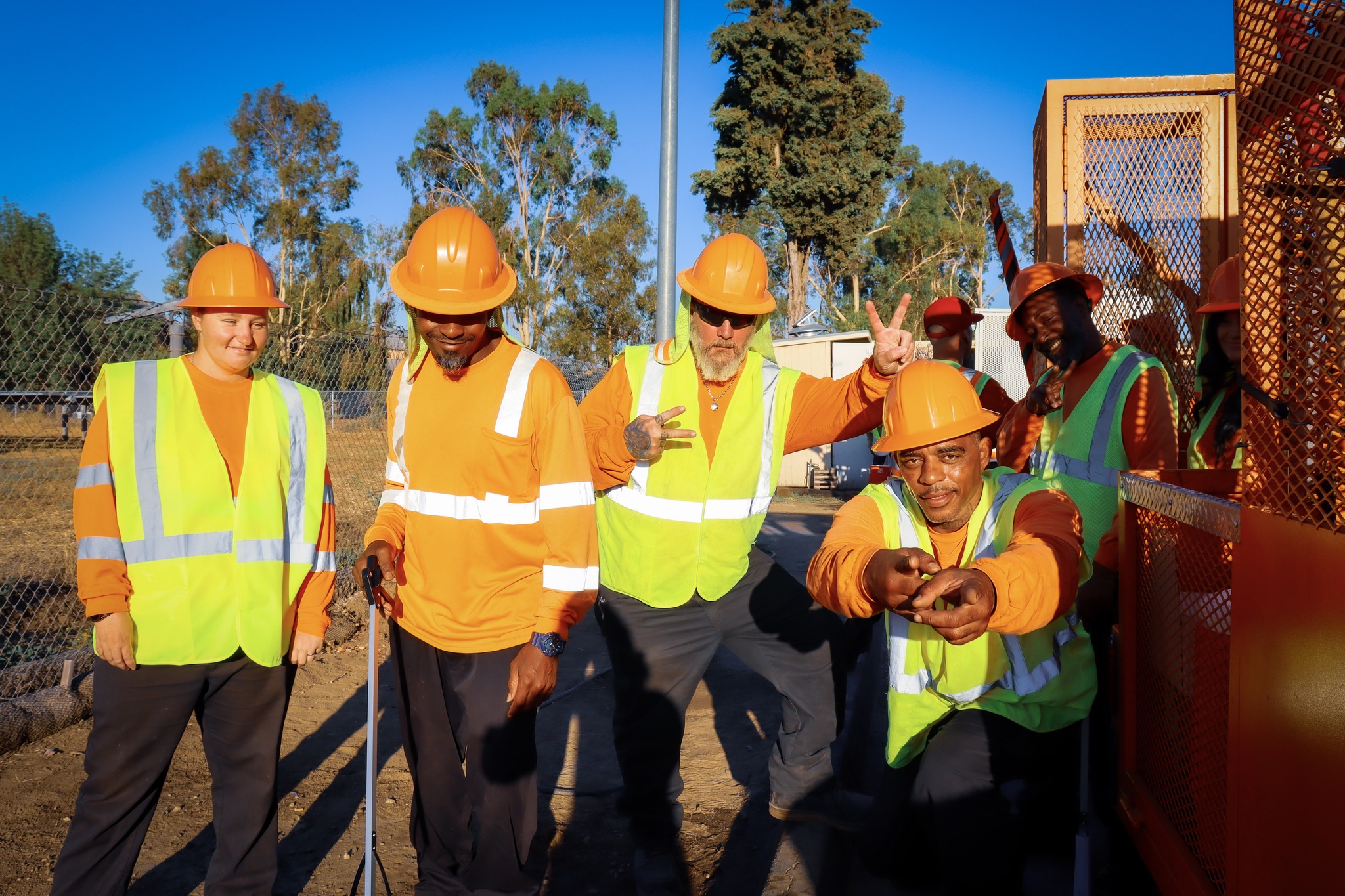
Indeed, Back 2 Work was once again a force for breaking longstanding negative cycles in its participants’ lives. Under the Butte County Office of Education’s Statewide and Local Support Services (SLSS) division, Back 2 Work is an integral part of California’s efforts to aid the transition to employment and education for underserved and disadvantaged adults. Primarily, these participants are those who have been incarcerated, those experiencing homelessness, transitional-age youth, veterans who are out of work, and others with significant barriers to employment.

Through partnerships with Caltrans, the Department of Corrections and Rehabilitation, and many other statewide programs, Back 2 Work provides immediate job placements and comprehensive support to help individuals overcome those barriers and reintegrate into the workforce–and into their communities. The program comprises about 25 specialized employees who work with both participants and subcontractors and partners to implement B2W’s programming.
Tad Alexander, BCOE’s Deputy Superintendent of SLSS, said Back 2 Work has grown to be one of his favorite statewide programs over the last 10 years, as he’s seen it succeed in its mission time and time again.
“I’ve watched this program grow and change an endless number of lives,” Alexander said. “It positively affects whole families, not just the participants. It crosses both sides of the aisle. It’s a program everyone can be on board with because we help create taxpayers, community members, and participants who are happy to be back and contributing to society.”
On paper, the story of how those efforts went in the 2023-24 year are staggering:
- More than 6,000 participants, with nearly 1,400 individuals successfully gaining employment
- About 90 participants pursued higher education or vocational training
- Nearly 30 participants were direct Caltrans hires
- Back 2 Work road crews picked up 4.12 million bags of litter from California highways. That’s equivalent to 180 Olympic-sized swimming pools
The “Why?”: It’s About People

Beyond the statistical impacts, though, are the countless stories of people, families, and lives that reset their trajectories. These are the stories that matter to Hight, who became interim senior director in July after years of involvement. Hight has focused on one primary mission: breaking the cycles of recidivism, poverty, and dependence on social services. Hight’s experience of coming from a disadvantaged background has shaped his understanding of these challenges. It’s also strengthened his resolve to lead the program’s transformative efforts.
“I know what it’s like to come from a place where opportunities are scarce. But I was fortunate,” said Hight, who got access to higher education through college athletics. “Many people never get that break.”
This personal connection fuels Hight’s commitment to making meaningful change for others, even toward the end of his professional career. He saw a chance to help the program make an impact.
“We’ve disrupted nearly 6,000 lives in a positive fashion. We’ve disrupted their continuance on recidivism and reentering the justice system. We’ve disrupted their pervasive reliance on social services.
We’ve disrupted generational poverty.”
What Back 2 Work accomplishes goes beyond employment—it addresses deep-rooted challenges faced by participants. Many of the individuals served by the program lack essential skills that others take for granted, like financial literacy, digital literacy, and soft skills for the workplace. These deficits, often the result of systemic gaps in education and social support, can make it nearly impossible for individuals to break free from cycles of disadvantage without intervention.
Breaking the Cycle: A Holistic Approach
Back 2 Work’s success depends on its holistic approach, which focuses on the whole person, not just employment.
“It’s all about making a person whole,” Hight said. “We talk about wrap-around services–all of those center on social/emotional well-being, health, maturity.”

For many participants, the trauma of incarceration or homelessness has left them emotionally and socially stunted. In fact, the proactive healing of trauma is a key element of the program’s work. Participants enter the program often lacking the basic life skills necessary to succeed in society. Without exposure to environments where these skills are cultivated—be it structured education or specialized mentorship programs—many never develop the tools they need to escape cycles of poverty and reliance on social services.
“They don’t have digital literacy, they don’t have financial literacy, they don’t have the soft skills. So there’s simply the factor of not knowing, of not being put in those environments,” Hight said. “And, of course, there’s no way that you can go to prison or be homeless and not be traumatized.”
This is where Back 2 Work comes in, providing individualized support to help participants gain the skills they need. The challenges vary from person to person, making a one-size-fits-all approach ineffective. Hight likens the work to solving a “Rubik’s Cube” for each participant, with each individual presenting a unique set of challenges.

Personal Connections and Success Stories
Back 2 Work is rife with stories of transformation, whether it’s participants earning certifications, reconnecting with family, or overcoming personal struggles. One story that stands out to Hight involves a participant who became a certified auto mechanic, just as his father was. But for Hight, the most powerful success stories are those of participants who reconnect with their families.
“There’s nothing more powerful than hearing someone say they’ve reconnected with their kids or parents after years of being estranged,” he said. “That’s when you know the program is working.”
Challenges and Future Goals
Despite the program’s many successes, there is still much work to do. About 25 to 30 percent of participants transition into stable employment and housing after completing the program. Hight’s goal is to increase that number to two thirds. To achieve this, he plans to improve tracking mechanisms to oversee participants’ progress after they leave the program, with checkpoints at three and six months. This will allow the program to better understand its long-term impact and make adjustments as needed.
Hight also sees the need to diversify the program’s funding sources. Another “disruptive” force at play in the past year was budget cuts that hampered the program’s ability to deliver its services. The bulk of Back 2 Work’s funding comes from Caltrans, but Hight believes the program is worthy of philanthropic dollars and more grant funding. Alexander, who oversees much of the work that goes into securing the Back 2 Work budget, agreed.
“We have received a lot of support from the state, both in terms of funding to make our programs work and partnerships from many agencies, like Caltrans,” Alexander said. “They understand our mission and the return they see from their funding is an investment in humans, in California citizens and families. It makes a better future for everyone.”

A Path Forward
As Hight looks ahead, he remains focused on expanding the reach and impact of Back 2 Work. The program remains a powerful reminder that disruption, when done right, can change lives for the better. By addressing not just the symptoms of poverty and disadvantage but the root causes, the program is offering participants a pathway to lasting transformation.
“We’re not just giving people jobs,” Hight said. “We’re giving them a chance to rebuild their lives, reconnect with their families, and break the cycles that have held them back for so long.”
Back 2 Work employees Kristen Rocha and Joycelene Gonzalez contributed to this story.
You must be logged in to post a comment.